Introduction
- Introduction
- What “payment complete” means in EDD
- Match gateway behavior to instant fulfillment
- Test mode, keys, and environments
- Fraud, velocity, and digital goods
- Refunds, Software Licensing, and activations
- Taxes, invoices, and descriptors
- When you need custom integration
- Email receipts, customer comms, and support load
- Go-live checklist
- FAQ
- Related reading
Easy Digital Downloads (EDD) is purpose-built for files, licenses, and software—where fulfillment is typically instant and refund policies differ from physical goods. Your payment gateway must support fast authorization, reliable order/payment state, and—when needed—refunds that your team can reconcile against gateway settlement reports.
PatSaTECH maintains EDD gateway extensions—browse Easy Digital Downloads payment gateways. Stores that sell shippable products on WooCommerce should also review WooCommerce payment gateways.
EDD vs Woo (payments): Both require capture and async completion paths, but EDD often centers on immediate download or license unlock and extension-specific behavior (for example Software Licensing). Always test refunds with the same extensions you run in production—not only “plain” downloads.
What “payment complete” means in EDD
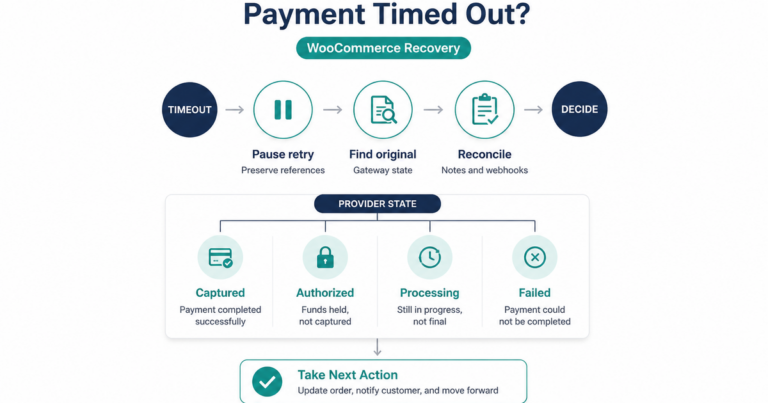
In most EDD setups, customers should receive access (download links or license actions) only after the gateway confirms payment in a way your integration understands. That confirmation may arrive via:
- Redirect return to your success URL, and/or
- Webhook, IPN, or server-to-server notification that updates payment status if the customer closes the browser early.
If you rely only on the browser returning to the site, you will eventually strand valid payments—see patterns in a beginner’s guide to payment gateway webhooks and operational monitoring ideas in webhook monitoring for WooCommerce (async concepts apply across carts; confirm EDD-specific hooks and gateway plugins for your stack).
Match gateway behavior to instant fulfillment
Digital goods usually need immediate access after capture (or equivalent “sale” semantics). Before go-live, confirm:
- Redirect flows return to the correct EDD confirmation path with a valid payment reference.
- Webhooks mark payments complete even when the customer never lands on the “thank you” page.
- Partial payments or pre-orders (if you use them) have a documented mapping to download eligibility.
Link evaluation criteria to how to evaluate payment gateway plugins and strategic fit to payment gateway plugin vs custom integration.
Test mode, keys, and environments
Treat sandbox and live as different operational worlds:
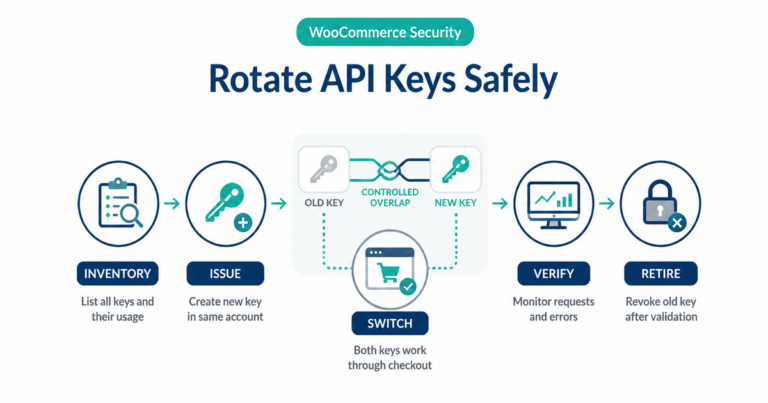
- Keep test keys off production and live keys out of staging content.
- Document who may rotate credentials and where they are stored (
wp-config.php, env vars, or host secrets). - After EDD or gateway plugin updates, re-run a small sandbox purchase and a webhook verification step—same discipline as WooCommerce payment gateway integration checklist (checklist mindset applies even though screens differ).
Fraud, velocity, and digital goods
Digital products attract card testing and velocity abuse. Use your processor’s risk tools (velocity limits, 3DS where appropriate) and align with broader guidance in real-time fraud detection tools.
Purchase-intent note: If fraud losses exceed your plugin + gateway budget, the fix is often configuration and monitoring, not a cheaper extension—confirm you are not under-buying support and renewals for business-critical revenue.
Refunds, Software Licensing, and activations
If you use Software Licensing (or similar), define policy and automation for:
- Full and partial refunds—what happens to activations and license keys?
- Chargebacks vs merchant refunds—different workflows; see chargebacks vs refunds.
EDD behavior here is extension-specific—test in staging with realistic license scenarios, not only “delete order.”
Taxes, invoices, and descriptors
EDD can work with tax extensions and invoicing add-ons. Payment plugins pass line items the processor accepts—they do not replace tax advisors or local invoicing law.
Statement descriptors should match what customers expect on their bank statement; poor descriptors increase disputes—tie back to chargebacks vs refunds.
When you need custom integration
Consider custom payment gateway integration when you need headless delivery, multi-vendor payouts, a processor without a maintained EDD extension, or non-standard order objects. Document payment state ownership and webhook consumers up front.
Email receipts, customer comms, and support load
Digital buyers expect instant confirmation. Misconfigured templates or spam folder delivery create “I paid but got nothing” tickets even when the gateway captured funds.
Before launch, verify:
- Receipt emails show the correct total, currency, and order/payment reference your team uses in support.
- From addresses and domains pass SPF/DKIM expectations for your host—payment emails are high-anxiety for customers.
- Support macros reference gateway transaction IDs so staff can reconcile without logging into multiple systems.
This operational layer is independent of which EDD theme you use—but it determines whether your gateway investment feels “broken” to buyers.
Go-live checklist
- [ ] Sandbox purchase completes; customer receives download / license as designed.
- [ ] Close browser before return URL—webhook or IPN still marks payment complete.
- [ ] Refund path tested in gateway and EDD (or document single source of truth for finance).
- [ ] Statement descriptor matches brand.
- [ ] Email receipts and receipt pages show consistent totals and order references.
FAQ
Does EDD require webhooks?
Many modern gateways rely on async notifications for reliable completion; treat “redirect-only” assumptions as high risk for digital delivery.
Should I buy professional installation?
If you lack staging discipline or have a fixed launch date, see when to buy plugin installation support and PatSaTECH plugin installation support.
What about “best gateway for digital goods”?
Start from your processor contract, then compare extensions—best payment gateways for digital goods (refresh publication year in title when you update the live post).
Can I use the same gateway plugin settings as my WooCommerce store?
Sometimes, but do not copy webhook URLs or keys blindly—cart, order objects, and plugin implementations differ. Test EDD flows on staging even if Woo is already live.
How do I compare extensions before purchase?
Use buying a payment gateway plugin for WordPress for a pre-checkout matrix (sandbox tests, support renewals, webhook behavior).
Related reading
- Buying a payment gateway plugin for WordPress
- Plugin vs custom integration
- How to evaluate payment gateway plugins
- Shop